


Agenda 2030: what it is and why it matters for a sustainable future

In a world where environmental, social and economic challenges are becoming increasingly evident, an urgent and collective call to action emerges. The 2030 Agenda, adopted by all United Nations Member States in September 2015, represents a promise of hope and change. It is a global commitment to tackle the most pressing problems of our time and build a more promising future for all.
At its core, the 2030 Agenda is a roadmap towards a fairer, more prosperous and sustainable future. At its heart are the 17 Sustainable Development Goals (SDGs), an ambitious set of targets ranging from poverty eradication to environmental protection, gender equality and inclusive economic development.
Throughout this article, we will explore the 2030 Agenda and the SDGs in detail. We will discover what they mean for our future, how they are being implemented worldwide and what each of us can do to contribute to their success. Join us on this journey towards a more sustainable world and discover how, together, we can make a difference.
Origin and scope of the 2030 Agenda
The 2030 Agenda, a key milestone on the path to a more sustainable world, emerged in response to the urgent need to address global challenges. It was unanimously adopted by the 193 United Nations Member States in September 2015 during the Sustainable Development Summit held in New York.
The road to the 2030 Agenda dates back decades, with precedents such as the 1992 Rio Earth Summit and the 2002 World Summit on Sustainable Development in Johannesburg. However, it was in 2015 that a historic consensus was reached on an ambitious and universal global development framework.
The 2030 Agenda consists of 17 Sustainable Development Goals (SDGs) and 169 interconnected targets designed to address humanity’s main challenges, from poverty eradication to environmental protection and the promotion of peace and justice. These goals are interlinked and recognize the need for comprehensive and collaborative solutions.
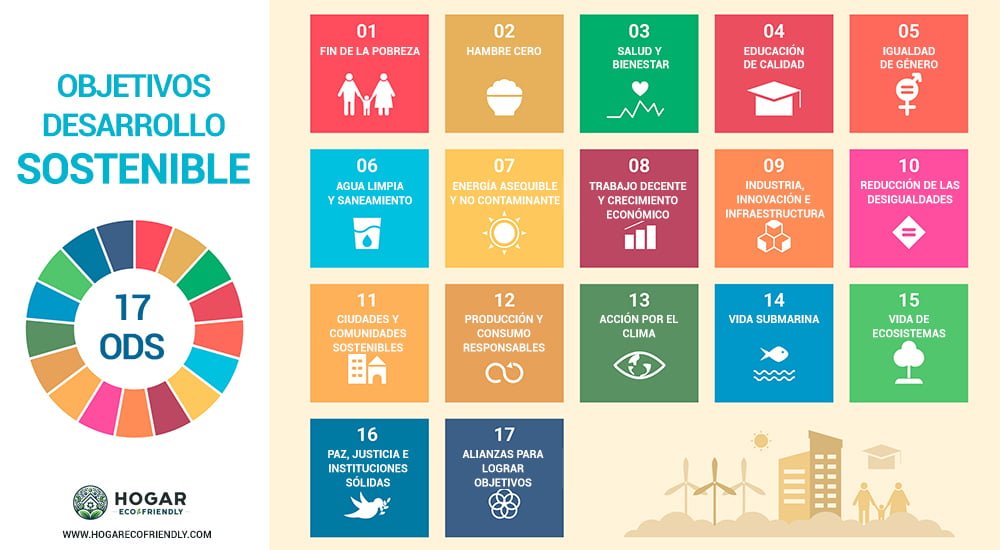
The 17 Sustainable Development Goals (SDGs)
Below, we explore each of the 17 SDGs, their importance, associated targets and potential impact on building a fairer, more prosperous and sustainable future.
1. No poverty
End poverty in all its forms by ensuring access to basic services, decent work and equal opportunities.
2. Zero hunger
Ensure food security, promote sustainable agriculture and end hunger worldwide.
3. Good health and well-being
Ensure healthy lives and promote well-being for people of all ages.
4. Quality education
Guarantee inclusive, equitable and quality education and lifelong learning opportunities.
5. Gender equality
Achieve gender equality and empower all women and girls.
6. Clean water and sanitation
Ensure availability and sustainable management of water and sanitation for all.
7. Affordable and clean energy
Guarantee access to affordable, reliable and sustainable energy.
8. Decent work and economic growth
Promote sustained, inclusive and sustainable economic growth and decent work.
9. Industry, innovation and infrastructure
Build resilient infrastructure and foster inclusive and sustainable industrialization.
10. Reduced inequalities
Reduce inequality within and among countries.
11. Sustainable cities and communities
Make cities inclusive, safe, resilient and sustainable.
12. Responsible consumption and production
Ensure sustainable consumption and production patterns.
13. Climate action
Take urgent action to combat climate change and its impacts.
14. Life below water
Conserve and sustainably use oceans and marine resources.
15. Life on land
Protect, restore and promote sustainable use of terrestrial ecosystems.
16. Peace, justice and strong institutions
Promote peaceful and inclusive societies and access to justice.
17. Partnerships for the goals
Strengthen global partnerships for sustainable development.
Global implementation of the 2030 Agenda: an ongoing process
Since its adoption in 2015, the 2030 Agenda has driven global action through national and local strategies. Countries adapt the SDGs to their specific contexts by designing targeted policies and establishing monitoring and evaluation systems.
Beyond governments, implementation relies on the active participation of civil society, the private sector, NGOs and local communities. Collaboration among these actors is essential to achieve the SDGs effectively and equitably.
How individuals can contribute to the success of the 2030 Agenda
Each of us can play a vital role by adopting sustainable consumption habits, supporting responsible businesses and engaging in community initiatives.
By recycling, reducing resource use and advocating for policies that promote equality and justice, we can help build a more sustainable future for all.