


Glaciers: vital water sources and climate regulators
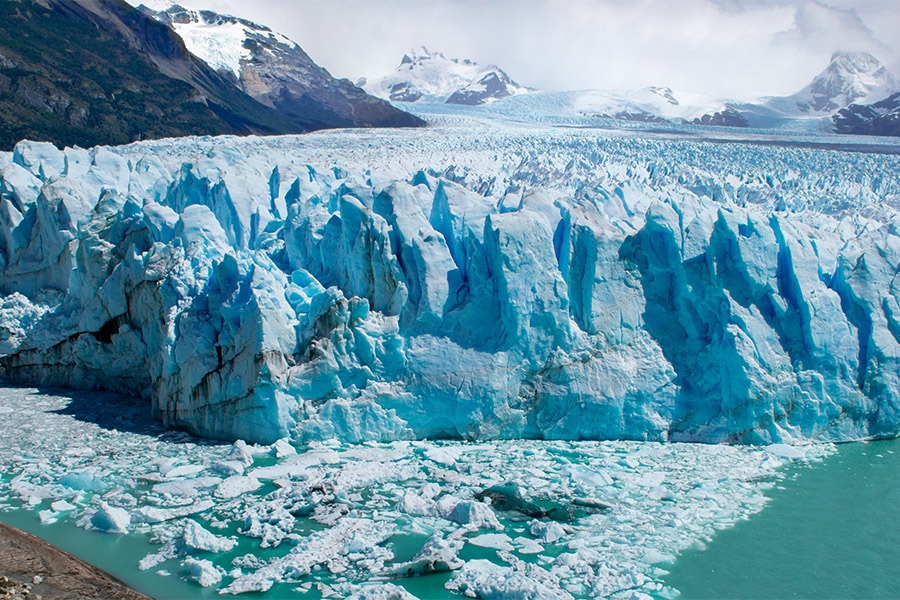
Glaciers are much more than spectacular white landscapes. They are vital sources of fresh water, natural climate regulators, and witnesses to the planet’s geological history. However, global temperature rise has triggered an accelerated loss of these ice masses, with devastating consequences.
In response to this emergency, the United Nations (UN) has declared 2025 as the International Year of Glacier Conservation, aiming to raise global awareness, promote research, encourage public policies, and mobilize resources for their protection.
What does this proclamation mean?
The International Year of Glacier Conservation, unanimously approved by the UN General Assembly in December 2022 (resolution A/RES/77/158), addresses the growing concern over the rapid disappearance of glaciers, particularly in Central Asia, South America, the Alps, and polar regions.
This initiative is mainly driven by Tajikistan, a country where glaciers feed major rivers like the Amu Darya and has been significantly affected by glacier retreat. The resolution highlights the urgent need to:
- Increase international scientific cooperation
- Finance monitoring and early warning systems
- Promote public policies for climate adaptation
- Support environmental education worldwide
Why are glaciers important?
Glaciers cover around 10% of the Earth’s land surface and store approximately 70% of the planet’s freshwater. While present across various latitudes, they play a critical role for fragile ecosystems, indigenous communities, and cities that rely on glacier runoff for water supply.
Key functions of glaciers:
- Hydrological regulation: Gradually release water, maintaining river flow even in dry seasons.
- Solar reflectivity (albedo): Ice surfaces reflect solar radiation, cooling the planet; their loss accelerates global warming.
- Biodiversity support: High-mountain ecosystems and endemic species depend on glaciers.
- Geological and cultural heritage: Many glaciers are sacred or historic sites for local communities.
Ongoing crisis: alarming data
- According to the World Meteorological Organization (WMO), glacier melt is one of the main contributors to sea-level rise.
- The World Glacier Monitoring Service estimates that in the last 40 years, glaciers have lost over 9,000 gigatons of ice.
- In regions such as the tropical Andes, glaciers could disappear completely within 30 years.
- The IPCC warns that massive ice melt could trigger extreme events like sudden floods, seasonal water shortages, and soil fertility loss.
The first World Glacier Day
The inaugural World Glacier Day will be celebrated on March 21, 2025, chosen near World Water Day (March 22) to emphasize the link between glaciers and water supply.
Global coordinated events on that day will include:
- Educational workshops in schools and universities
- Social media awareness campaigns
- Glacier-themed photography and art exhibitions
- Public scientific seminars
- Documentary screenings in cultural centers and cinemas
The major international conference
From May 29 to June 1, 2025, the International Conference on Glacier Conservation will be held in Dushanbe, Tajikistan, organized with UNESCO and WMO.
The conference will bring together:
- Political leaders from over 50 countries
- Experts in glaciology, hydrology, and climate change
- Representatives of indigenous communities affected by glacier melt
- Environmental NGOs and young activists
The launch of a Global Glacier Declaration is expected, establishing an action framework for the next decade.
Consequences of glacier melt
Glacier disappearance affects human and natural life beyond aesthetics:
Social impacts:
- Potable water scarcity for millions of people
- Reduced agricultural production
- Risk of conflicts over water resources
- Forced migrations due to natural disasters
Ecological impacts:
- Loss of habitats for cold-adapted species
- Disruption of wildlife reproductive cycles
- Disappearance of endemic mountain species
Economic impacts:
- Impact on mountain tourism and winter sports
- Losses in hydroelectric production
- Infrastructure damage from avalanches or glacial floods
What can we do at home?
Even from daily life, everyone can contribute:
- Reduce carbon footprint: Use public transport, consume local products, avoid unnecessary flights.
- Save water and energy: Take short showers, turn off lights, insulate homes.
- Support climate policies: Vote for sustainable proposals, sign petitions, pressure governments.
- Educate and share: Inform others about the importance of glaciers and the climate crisis.
- Donate or collaborate with NGOs working on glacier conservation or adaptation projects.
Conclusion: a year to take action
The International Year of Glacier Conservation 2025 is more than symbolic—it’s a call to act locally and globally with the urgency demanded by the climate crisis.
Protecting glaciers means safeguarding future water sources, mountain ecosystems, and global climate stability. This year represents a historic opportunity to turn awareness into action.


