


BioCultura Madrid 2025: leading fair for organic products and responsible consumption
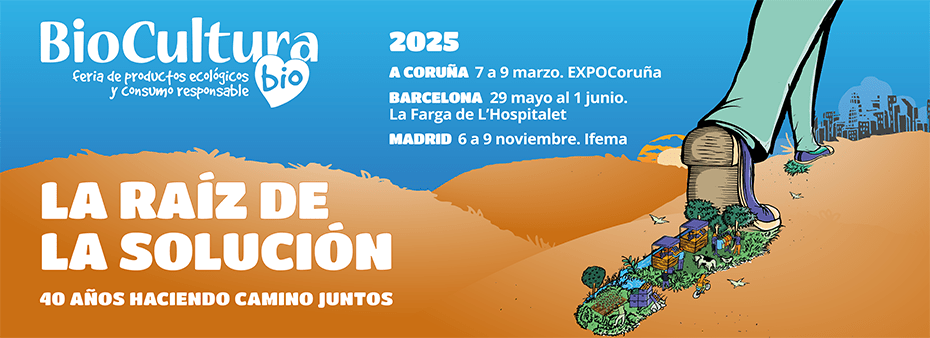
From November 6 to 9, 2025, the IFEMA exhibition center in Madrid will host the 41st edition of BioCultura Madrid, Spain’s most important fair for organic products and responsible consumption. This annual event arrives stronger than ever, with record attendance and a leadership change marking a new stage for the sector.
Record participation setting trends
According to the organizers, this edition will feature over 800 exhibitors and an expected 70,000 visitors, a significant increase compared to previous years. Other sources report “over 400 exhibitors” and “more than 50,000 visitors,” highlighting the event’s growing size and reach.
Quantitative growth is important, but so is quality: a program of over 300 parallel activities including workshops, showcookings, conferences, and professional sessions.
Leadership change: new direction, new phase
This edition also marks a significant organizational change. Montse Escutia, an agronomist with extensive experience in the ecological sector, takes over the leadership of BioCultura and the presidency of the Asociación Vida Sana, succeeding Ángeles Parra, who led the event for over four decades.
Escutia aims not only to maintain the legacy but also to boost domestic organic consumption in Spain, support small producers, short supply chains, and the added value of local “bio” products.
An expanding ecological ecosystem
The 41st edition of BioCultura Madrid goes beyond showcasing products. The fair brings together organic food, eco-natural cosmetics and hygiene, sustainable fashion, and well-being and healthy home.
For instance, the fair hosts sessions on incorporating organic foods into collective catering menus, a key segment to expand “bio” consumption beyond specialized niches.
Participation from the Comité de Agricultura Ecológica de la Comunidad de Madrid (CAEM), with a 147 m² stand representing 14 Madrid-based companies, strengthens the regional and local connection.
Reference space for professionals and citizens
BioCultura Madrid serves a dual role: a professional showcase where producers, distributors, and sector professionals meet, form alliances, and display innovations; and a space open to citizens seeking conscious, healthy, and environmentally friendly alternatives. It is a key event in Spain’s responsible consumption calendar.
Relevance for the Spanish ecological sector
Spain is already a European leader in organic production area, with millions of certified hectares. However, domestic “bio” consumption still has room to grow. BioCultura Madrid acts as a catalyst: showcasing the offer, increasing visibility, supporting regulations, guiding consumers, and connecting small producers to the market.
The fair emphasizes choosing certified organic products, the social and environmental dimension of purchase decisions, the power of local economies and short supply chains, and the challenge of turning responsible consumption from a trend into a norm.
Highlights for attendees and followers
- Check the activity program: workshops, showcooking, and presentations to learn beyond shopping.
- Visit local producers’ stands to discover origin, traceability, and support small businesses that preserve biodiversity.
- Verify certifications: choosing guaranteed products is key to avoiding greenwashing.
- Spot new trends: toxin-free cosmetics, sustainable fashion, innovative food products, organic wines.
- Share what you learn: on social media, blogs, or communities, multiplying the impact of conscious consumption.
Challenges ahead
- Increase domestic consumption of organic products in Spain.
- Improve sector professionalism and small producers’ visibility.
- Educate consumers to make truly informed choices.
- Ensure ecological authenticity against empty green labels.
- Promote public policies supporting the sector, incentives, training, and visibility.
Conclusion
BioCultura Madrid 2025 represents a milestone for Spain’s ecological sector: record numbers, new leadership, a wide offering, and multiple activities. For Hogar Eco Friendly readers, the fair is not only news but an invitation to explore, choose, and act. Every organic purchase, sustainable habit, and certified product contributes to the paradigm shift our planet urgently needs.


