


Envision Energy Wins “AI for Sustainability Excellence” Award for Smart Renewable Transition
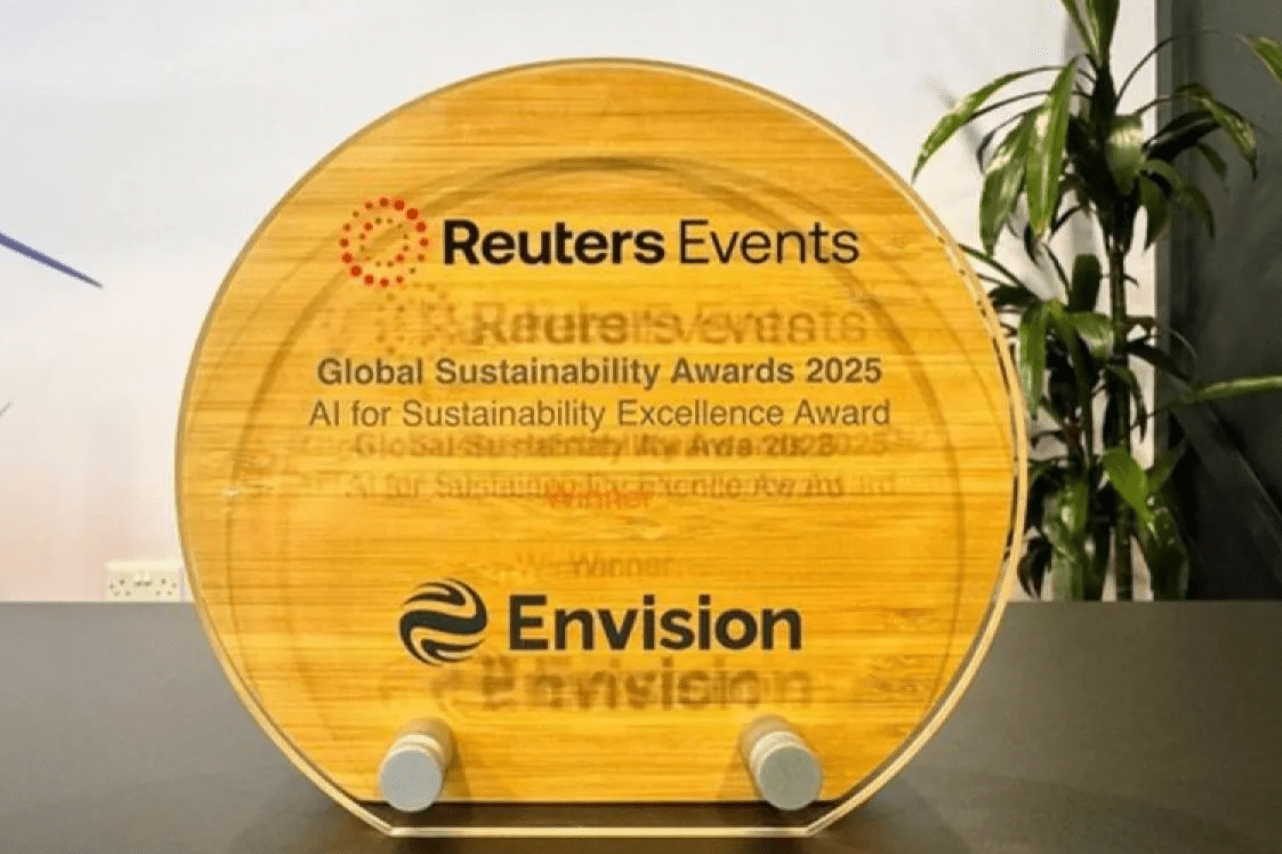
The transition toward a cleaner, more efficient, and sustainable global energy system is gaining decisive momentum thanks to the convergence of advanced digital technologies and renewable energy. In this context, the corporation Envision Energy —an international leader in green technology— was recently recognized with the prestigious “AI for Sustainability Excellence” award at the Reuters Global Sustainability Awards 2025, for its innovative application of artificial intelligence in the energy transition.
An award reflecting a paradigm shift
The Reuters Global Sustainability Awards are among the world’s most respected initiatives for sustainability and climate leadership, serving as a benchmark for companies integrating economic growth, environmental impact, and digital transformation. This year, Envision Energy stood out among over 800 entries from 40 countries, highlighting the global relevance of its approach.
The “AI for Sustainability Excellence” recognition is given to organizations that use artificial intelligence to accelerate the energy transition, reduce carbon footprint, optimize operations, renewable production, and deliver sustainable and intelligent value. Envision’s strategy aligns closely with themes like responsible consumption, ecological living, and sustainable solutions.
What does Envision Energy do?
Envision Energy applies artificial intelligence across the entire renewable energy value chain: from optimizing wind turbines to smart storage systems, as well as integrated models for solar generation, storage, hydrogen, and ammonia.
The company operates its own operating system, EnOS, which enables industries and cities worldwide to monitor, predict, and optimize energy generation while reducing carbon intensity in their operations.
Concrete example: Envision has deployed what is described as the world’s largest green hydrogen and ammonia plant, fully integrated with wind-solar-storage-hydrogen-ammonia, managed entirely through its AI-powered “Large Energy Model.” This demonstrates that artificial intelligence in the energy transition is not just a theoretical concept but a real industrial-scale solution.
Importance for responsible consumption and ecological living
For websites focused on ecology, sustainability, and responsible consumption, this news offers multiple angles:
- Resource optimization: AI improves renewable production and energy storage, reducing losses, increasing efficiency, and lowering carbon intensity. This means cleaner, higher-quality energy reaches consumers, supporting more responsible consumption.
- Democratized innovation: Though the example is high-tech industrial, the underlying principles —data, sensors, optimization, intelligent software— can inspire smaller-scale, community, or home solutions promoting ecological living.
- Systemic shift toward intelligent models: Moving from “automation” to “autonomy,” as Envision’s CEO Lei Zhang notes, represents a paradigm shift: systems not only execute programmed actions but learn, decide, and evolve. This directly impacts distributed energy systems, microgrids, smart homes, and ecological consumption.
- Global awareness and local impact: By emphasizing that the award was granted among 40 countries and 800 candidates, it highlights that sustainability is a global goal, yet individuals can also participate locally using technology, renewables, or eco-friendly consumption habits.
Challenges and keys for the future
While progress is impressive, AI in energy transition also faces challenges:
- Access to large-scale, quality data: Models like Envision’s require vast amounts of reliable data; smaller or residential environments may face limitations.
- Infrastructure for storage and smart grids: Electrical networks must evolve to integrate AI, storage, renewables, microgrids, and more flexible systems.
- Equity in the energy transition: Envision emphasizes that this new era can be “intelligent, sustainable, and equitable.” Democratizing access to green and smart technologies is essential for responsible consumption to be accessible to all.
- Monitoring and transparency of impact: Measuring real impacts —carbon savings, efficiency improvements, emission reductions— and communicating them transparently is crucial.
What can eco-friendly consumers or communities do?
Even though Envision operates at large scale, lessons can be applied at home or community level:
- Consider energy providers or projects that integrate intelligence, data, and renewables.
- Adopt energy-efficient habits: smart appliances, managing self-consumption, and domestic storage if feasible.
- Promote awareness that “smart” and “sustainable” go hand in hand: connected homes, smart meters, demand optimization.
- Support policies, initiatives, and companies advancing AI-guided energy transition, as they represent the sustainable future we seek.
Conclusion
The news that Envision Energy won the “AI for Sustainability Excellence” award at the Reuters Global Sustainability Awards 2025 marks a milestone: artificial intelligence in the energy transition is no longer a future idea; it is a practice enhancing efficiency, renewables, storage, digitalization, and real sustainability. For websites focused on ecological living, responsible consumption, and sustainability, this case is both inspiration and a concrete example of technology serving the planet.
The implications for households, communities, and conscious consumers are vast: optimize, connect, decide intelligently, and build a cleaner, fairer, and more efficient energy future. Applying these approaches to daily life is part of the path toward truly responsible consumption.


