


Granada Geopark earns Starlight certification and boosts sustainable astrotourism
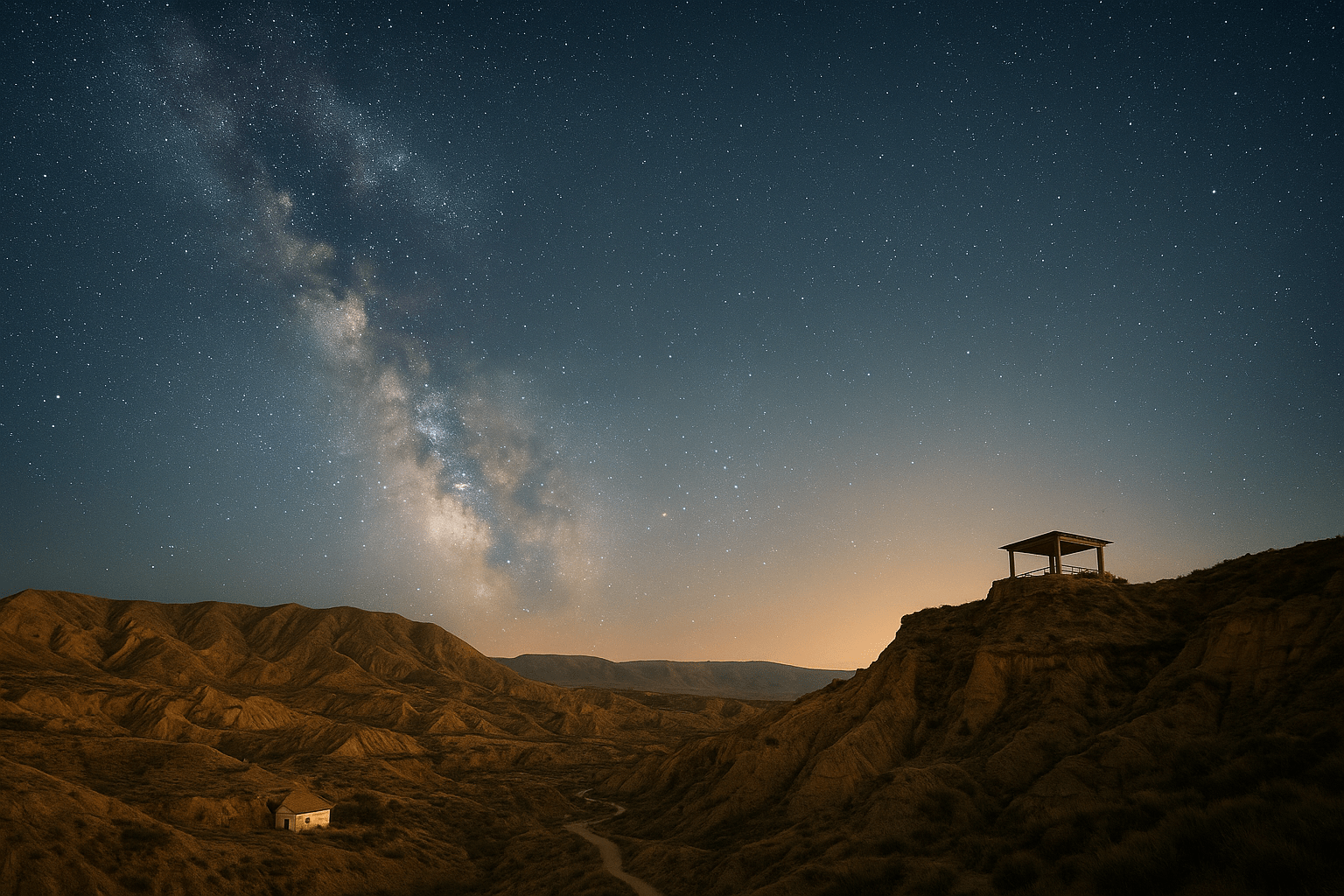
The province of Granada is attracting growing attention within sustainable tourism thanks to a recent milestone: the Granada Geopark has achieved certification as a Starlight Tourist Destination, an international recognition awarded by the Starlight Foundation. This seal not only highlights the exceptional quality of its night skies, but also consolidates the territory as a benchmark for sustainable astrotourism, a tourism model that combines science, natural heritage and smart rural development.
What does it mean to be a Starlight Tourist Destination?
The Starlight Tourist Destination certification is granted to territories that, through rigorous documentary assessments and on-site audits, demonstrate optimal conditions for night sky observation, low light pollution levels and an interpretative offer linked to astronomy. In the case of the Granada Geopark, the audit was completed after an inspection visit in June 2025, assessing astrotourism viewpoints, the Los Coloraos Astronomical Complex and the Almagruz Troglodyte Habitat as key nodes of the project.
This recognition attracts respectful, science-oriented tourism, promoting knowledge dissemination, population retention and job creation in rural areas.
Project origins and roadmap
The path towards certification began in 2021 with the Sustainable Tourism Plan for Destinations of the Granada Geopark, approved by the Provincial Council as a roadmap to connect tourism, sustainability and the local community. In parallel, the Sky Quality Office of the Andalusian Institute of Astrophysics (IAA-CSIC) conducted a technical study on sky brightness and light pollution. The analysis revealed that 11% of the territory presents exceptionally good conditions for astrotourism, while 42% meets high-quality requirements.
Infrastructure and territory as a stage for the stars
The formal agreement with the Starlight Foundation began in March 2025, followed by an inspection in June that assessed the emerging network of 15 astrotourism viewpoints, already operational or under construction, distributed across locations such as La Peza, Dehesas de Guadix and Puebla de Don Fadrique. Key sites such as the Los Coloraos Astronomical Complex (Gorafe) and the Almagruz Troglodyte Habitat (Purullena) were also reviewed.
In addition, the project builds on astrotourism experiences already established in the area, such as the Gorafe Skies Astrotourism Days and the Starlight Camp Certification of the Los Coloraos Complex, which were already part of Granada’s nocturnal heritage.
Benefits for rural and ecological development
The Starlight certificate is valid for four years, with an intermediate report after two years and the possibility of renewal following a new audit. This type of astrotourism has proven to be a sustainable strategy with minimal environmental impact, capable of:
-
Encouraging overnight stays and increasing tourist expenditure
-
Attracting visitors interested in science and nature
-
Creating green jobs in guiding, astronomy and rural services
-
Helping combat depopulation by retaining local population
-
Enhancing tourism offerings with unique educational and sensory experiences
Andalusian and national context
This achievement adds to similar recognitions in Spain, such as the Tierras Altas de Soria Association and the renewal of the Starlight Reserve in the Sierra de Gredos, reinforcing a growing trend in sustainable astronomical tourism. Recent reports also highlight the rise of star tourism in Andalusia, with initiatives in Huelva, Almería and the Gorafe region, including accommodations such as “Horizonte Bubble Rooms” and observatories like El Almacén and Los Coloraos.
A step towards the Geopark’s nocturnal future
With its accreditation as a Starlight Tourist Destination, the Granada Geopark positions itself on the international map of sustainable astrotourism. Visitors will not only enjoy exceptionally pure starry skies, but also a territory committed to science, culture, community and balanced economic development.
Ultimately, this destination offers more than landscapes: it offers purposeful experiences that respect the environment and connect people with the cosmos, geology and cultural memory.


