


Green gas: eight million Spanish homes are already ready to use it without renovations
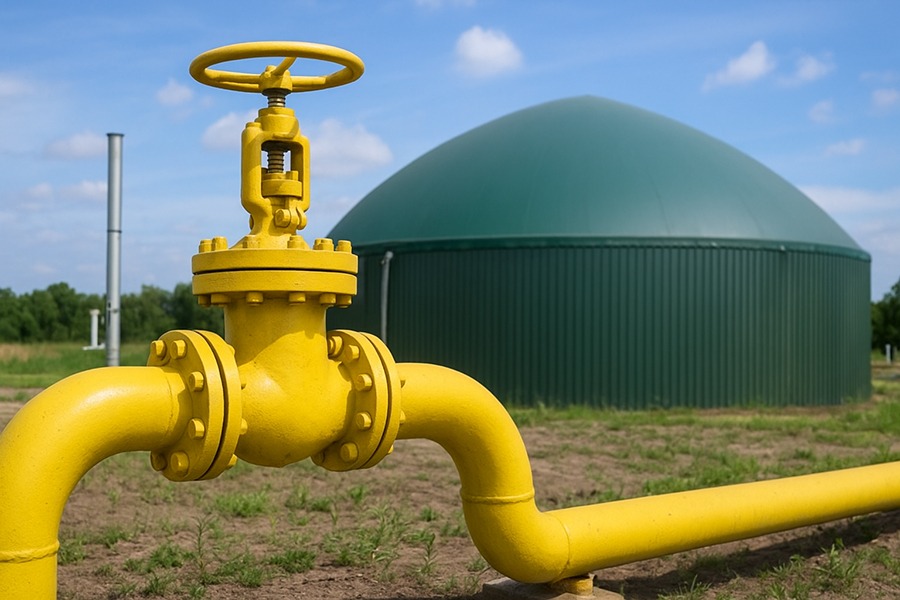
From 2025 onwards, Europe has taken a decisive step to accelerate the energy transition by eliminating public subsidies for the installation of fossil fuel boilers. This regulatory change is far from a minor bureaucratic detail: it marks a turning point in how households must think about their energy supply. In this context, green gas, also known as biomethane, is emerging as one of the most promising alternatives.
In Spain, around eight million households are already able to use green gas without carrying out renovations, changing boilers or investing a single euro. The infrastructure is ready, and existing installations can operate with this renewable energy immediately.
What exactly is green gas?
Green gas, or biomethane, is a source of renewable energy obtained from the decomposition of organic waste. Agricultural residues, livestock waste and even urban waste can be transformed, through anaerobic digestion processes, into a gas with characteristics similar to natural gas.
The main advantage is that, being chemically very similar to conventional gas, it can be directly injected into existing distribution networks. This means that households currently using gas boilers, cookers or water heaters can start consuming biomethane without any technical adaptation.
Efficiency, comfort and savings
The appeal of green gas lies not only in its sustainability, but also in its practicality. For a home with a gas boiler, the transition cost is zero. No construction work, appliance changes or infrastructure replacements are required.
Moreover, its widespread use could generate substantial economic savings. It is estimated that, in the residential sector, the adoption of green gas could save up to €29 billion by 2040, thanks to lower energy costs and greater independence from international fossil fuel markets.
Another strong point is its energy resilience. Unlike solar energy or wind power, whose production depends on weather conditions, biomethane can be produced, stored and distributed steadily throughout the year. This makes it a key element in an energy system that seeks reliability and continuity.
Advantages beyond the home
Although the immediate benefit is felt in households, the impact of green gas goes much further:
-
Industry: Sectors that depend on high temperatures in their processes, such as steelmaking, ceramics or the chemical industry, find biomethane to be a viable alternative to reduce emissions without sacrificing productivity. Projections indicate that this shift could translate into savings of over €16 billion by 2050.
-
Rural areas: Green gas production turns organic waste into a valuable resource. This not only avoids waste management problems, but also boosts the circular economy, encourages job creation in rural areas and improves the sustainability of local communities. Spain could, in fact, make use of up to 120 million tonnes of organic waste per year to generate biomethane.
Spain: a sleeping giant in green gas
The potential of our country is enormous, but it is still far from being fully exploited. Spain is the third European territory with the greatest green gas production capacity; however, the number of operational plants remains very limited. While neighbouring countries such as France have hundreds of active facilities, Spain has only a few dozen.
The paradox is clear: resources, technology and infrastructure are available, but the necessary momentum is still missing.
Why are eight million homes already ready?
The answer lies in infrastructure. Spain’s gas distribution network is one of the largest in Europe, with around 80,000 kilometres of pipelines in operation. This network is already prepared to receive biomethane, and the boilers installed in millions of homes can run on it without any modification.
This means that, in practice, millions of families could start using green gas tomorrow, provided it is available in their area.
The challenge: regulation and institutional support
Despite its advantages, the lack of a clear regulatory framework is slowing down the development of biomethane. Experts and industry associations are calling for concrete measures such as:
-
Establishing mandatory green gas quotas in energy demand.
-
Simplifying administrative procedures to build new production plants.
-
Officially recognising green gas as an essential technology for decarbonisation.
Without these actions, green gas risks remaining in the background, despite being one of the most practical and ready-to-use solutions.
What can we do as citizens?
Although the main lever for change lies in regulation, citizens can also play an active role in this transition:
-
Get informed and spread the word: Raise awareness of the existence and benefits of green gas within our communities and among our neighbours.
-
Demand sustainable energy policies: Make our call for a cleaner energy future heard by political parties, local councils and organisations.
-
Take part in collective initiatives: Joining platforms and associations that promote the energy transition can multiply the impact of citizen pressure.


