


Living cement that generates energy: the future of sustainable construction
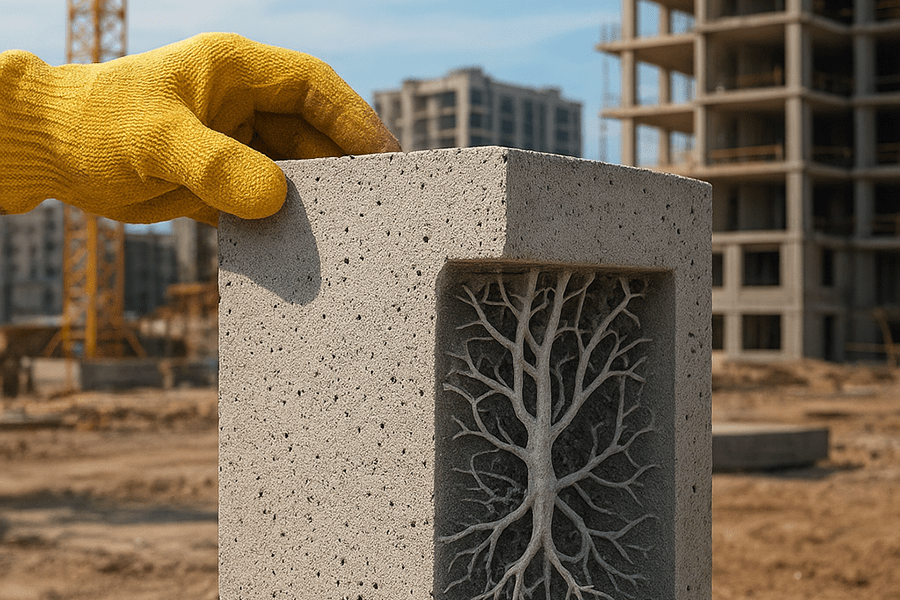
Sustainable construction has taken a giant leap into the future with the development of the first living cement that generates energy. This innovative material, developed by scientists at Aarhus University in Denmark, not only fulfils the structural function of traditional concrete but also acts as a biological battery thanks to the incorporation of living microorganisms.
This breakthrough represents a true revolution in construction, as it combines architecture, biotechnology and renewable energy into a single material. The implications are enormous: from autonomous buildings capable of generating their own energy to intelligent infrastructures that power sensors and monitoring systems without relying on the conventional power grid.
In addition, living cement opens new perspectives for reducing the environmental impact of construction, a sector responsible for a high percentage of global CO₂ emissions.
What is living cement that generates energy?
Living cement that generates energy is essentially concrete that incorporates living bacteria, in this case Shewanella oneidensis, microorganisms capable of extracting electrons from their own cells. This ability allows the cement to form an internal charge network, functioning as a biological supercapacitor that stores energy in a way similar to a battery.
To ensure the survival and continuous activity of these bacteria, the cement includes a microfluidic system that supplies nutrients, vitamins and minerals. This system can also reactivate inactive bacteria, restoring up to 80% of the material’s energy capacity.
Unlike traditional batteries that rely on critical minerals such as lithium or cobalt, this cement uses abundant resources and non-genetically modified bacteria, making it scalable and environmentally sustainable.
How living cement works
The operating mechanism of living cement that generates energy is based on the metabolic activity of the embedded bacteria. During their metabolism, these bacteria extract electrons and transfer them to an internal network within the cement. These electrons are stored as energy and can be released when needed, for example to power small electronic devices.
In laboratory tests, researchers connected six blocks of this cement and successfully powered an LED lamp continuously, demonstrating that the material can function as an autonomous energy source. The microfluidic system that nourishes the bacteria allows this energy-generating capacity to be maintained over long periods, which is crucial for real-world construction applications.
Potential applications of living cement
Living cement that generates energy has a wide range of transformative applications across different sectors:
-
Autonomous buildings: Structures capable of generating and storing their own energy, reducing dependence on the conventional power grid and increasing resilience to power outages.
-
Smart infrastructures: Roads, bridges and tunnels that power sensors to monitor structural integrity in real time, detecting cracks or deterioration without additional wiring.
-
Integrated renewable energy systems: Incorporation of living cement into solar panels or wind energy systems, where it can act as local energy storage, improving efficiency and sustainability.
-
Urban furniture and lighting systems: Benches, streetlights and public structures capable of generating enough energy to power LED lighting or interactive information systems independently.
These applications show how a construction material can evolve from passive to active, generating and managing energy in an ecological and efficient way.
Environmental benefits and sustainability
Living cement that generates energy offers significant environmental advantages over traditional materials:
-
Reduction of CO₂ emissions: Conventional cement is responsible for a large share of global CO₂ emissions. By enabling on-site energy generation, living cement reduces the need for fossil fuel-based electricity.
-
Use of abundant materials: Unlike traditional batteries that rely on scarce and conflict-prone minerals such as lithium, this cement uses accessible and renewable resources.
-
Biological regeneration: Its ability to reactivate dormant bacteria allows it to maintain functionality for years, reducing the need for frequent replacement.
-
Compatibility with renewable energy: It integrates easily with solar panels, wind turbines and ambient energy harvesting systems, contributing to self-sufficient buildings.
Together, these advantages position living cement as a key material for ecological and sustainable construction projects aligned with the energy transition.
Challenges and future outlook
Although living cement that generates energy is highly promising, several challenges must be addressed before large-scale adoption:
-
Scalability: Large-scale production requires adaptations in manufacturing processes and quality control to ensure bacterial viability and energy efficiency.
-
Building regulations: Current construction codes do not yet account for biologically active materials, requiring updates to regulations and safety standards.
-
Durability and maintenance: While bacteria can regenerate, microfluidic systems must be carefully designed to ensure continuous nutrient supply.
-
Energy optimisation: Current energy output is suitable for low-power devices, but further research is needed to increase storage capacity and energy flow.
Despite these challenges, experts agree that the future of living cement is extremely promising. The convergence of architecture, biotechnology and renewable energy could radically transform how we build and power our cities.
Impact on construction and architecture
The arrival of living cement that generates energy could profoundly transform architecture:
-
Architects will be able to design energy-self-sufficient buildings where walls and foundations not only support structures but also generate and store energy.
-
Smart cities will integrate this material into critical infrastructure, generating local energy for lighting, signalling and environmental monitoring systems.
-
Eco-housing initiatives will find living cement a powerful ally in reducing carbon footprints and approaching net-zero buildings.
This innovation makes construction a more versatile, efficient and future-ready sector.
Conclusion
The development of living cement that generates energy marks a turning point in sustainable construction. Beyond structural performance, this material adds the ability to generate and store energy in an ecological way, transforming buildings and infrastructure into active energy sources.
Its applications range from autonomous buildings to smart infrastructure and integrated renewable energy systems. Combined with its positive environmental impact, living cement stands out as a key resource for sustainable construction.
Although challenges remain, the outlook is bright. Living cement represents a unique opportunity to redefine how we build, inhabit and manage energy in our environment.


