


White hydrogen discovery in France: a clean energy breakthrough
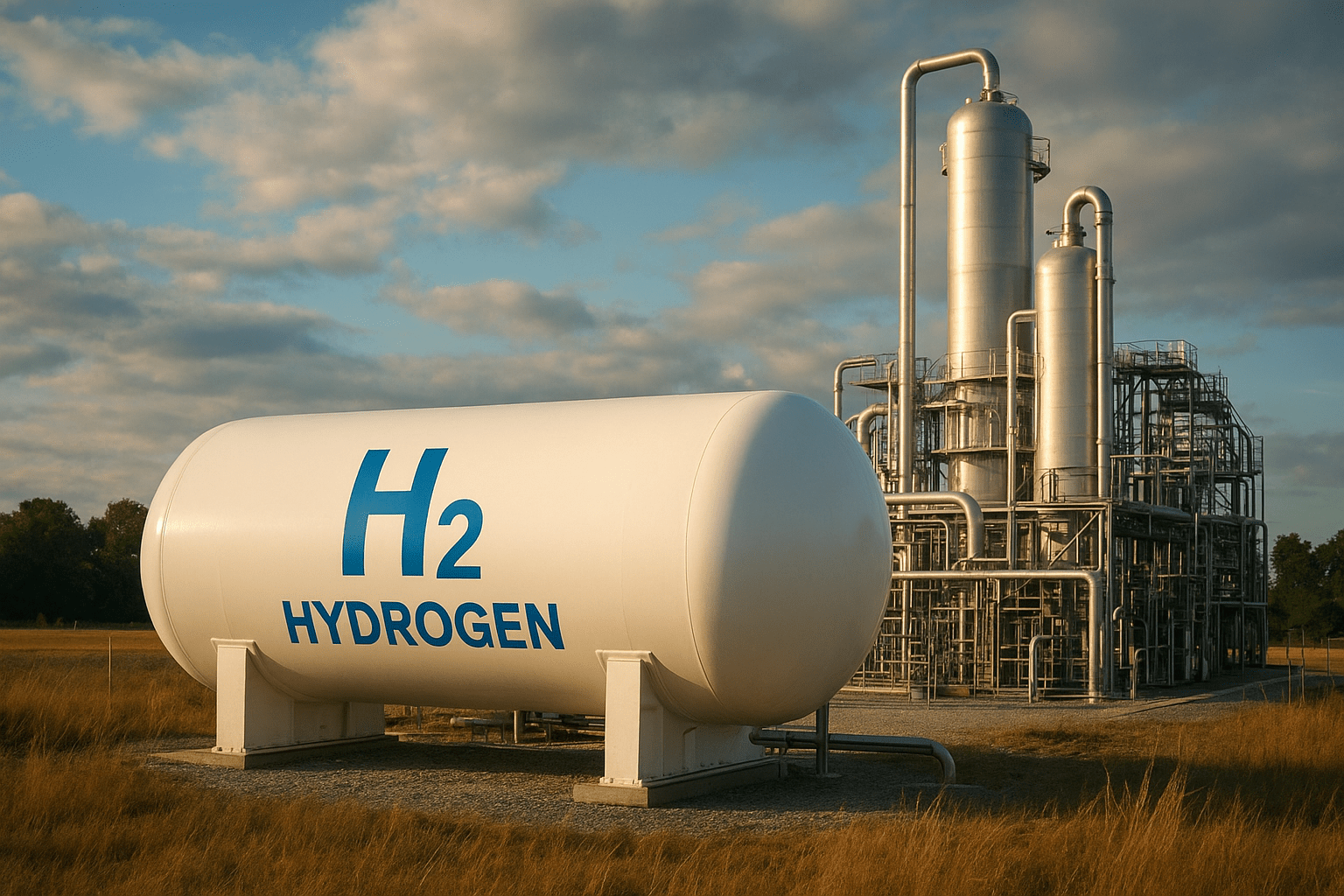
The recent discovery of a white hydrogen deposit in France, specifically in the Moselle region (Lorraine), has generated great global interest. Estimates point to around 46 million tonnes of this gas, whose extraction does not generate carbon dioxide emissions and whose economic value is estimated at several billion euros. This is a unique opportunity that could redefine the global energy transition and position France as a leader in the field of clean energy.
What is white hydrogen and why is it so important?
White hydrogen, also known as natural or geological hydrogen, is a resource that is produced spontaneously underground through natural chemical processes. Unlike grey hydrogen, which is obtained from methane and generates large amounts of emissions, or green hydrogen, whose production via electrolysis is still costly, white hydrogen is already present in nature. Its main advantage is that it can be extracted without generating CO₂ and at a much lower cost than other alternatives, making it a strategic resource for advancing towards a sustainable energy model.
Details of the discovery in Moselle
The discovery occurred during an investigation searching for methane at depths of more than 1,200 metres. To the experts’ surprise, what they found was a hydrogen seep with concentrations close to 20%. Subsequent measurements confirmed that the estimated volume of the deposit reaches 46 million tonnes. To put this into perspective, this figure is equivalent to more than half of the world’s annual production of grey hydrogen. This not only positions white hydrogen in France as one of the most significant discoveries in recent times, but also opens the door to revitalising the economy of Lorraine, a region historically linked to coal mining and heavy industry.
Energy and environmental impact
The importance of this discovery goes far beyond the figures. Firstly, it represents a significant acceleration in the transition towards a clean energy model. White hydrogen in France could be produced at an estimated cost of between €0.5 and €1.5 per kilogram, well below the current price of green hydrogen. In addition, its potential to replace fossil fuels is enormous, especially in hard-to-decarbonise sectors such as maritime and air transport, steel and cement production, or electricity generation.
From an environmental perspective, the use of white hydrogen would help reduce global greenhouse gas emissions, making it a key resource in the fight against climate change. It also represents a strategic factor for European energy security, as it would reduce dependence on gas and oil imports, strengthening the continent’s autonomy at a time of great international uncertainty.
Challenges still to be addressed
Although the potential is enormous, there are still significant technological, economic and environmental challenges to overcome. Extracting white hydrogen requires advanced techniques that are still under development, and investment in innovation will be necessary to ensure efficient and safe processes. In addition, current infrastructure is not ready for large-scale deployment: pipelines, storage systems and distribution networks adapted to this resource are needed.
Another key issue is regulation. France and the European Union will need to define a legal framework governing the exploration and exploitation of this type of deposit, ensuring that strict environmental standards are met. Finally, although hydrogen itself does not produce CO₂ when used, potential leaks during extraction or transport could have negative effects on the atmosphere, making it essential to establish rigorous safety protocols.
A global energy race
White hydrogen in France is not an isolated case. Other countries such as Mali, Albania, Australia and the United States are also exploring reserves of this natural resource. However, the size of the French deposit, together with its strategic location in the heart of Europe, makes it one of the most important discoveries of the last decade. The race for natural hydrogen is reminiscent of the oil boom of the 20th century, but with an added value: this time it is a clean resource capable of driving a sustainable future.


